Four application lenses

Where Glowforge workflows meet real material constraints

Choose a scenario by its acceptance criteria, not by a generic promise. Fit, contrast, edge finish, throughput, and ventilation can point to different test plans.

01 / Education

Mechanisms and model-making

Background: a classroom needs repeatable kits across several operators. Process: the instructor locks the file revision, plywood source, thickness check, and extraction checklist before running a small fit coupon. Result to verify: tabs seat without forced assembly and the record can be followed by another trained operator.

Limit: supervision, approved materials, and local ventilation rules remain site responsibilities.
02 / Retail

Acrylic displays and signs

Background: a small shop needs clean edges and predictable alignment. Process: clear, cast, and colored acrylic samples are compared for kerf, melt, flame polish appearance, and protective-film behavior. Result to verify: the chosen lot meets the visual standard after cleaning and assembly.

Trade-off: faster motion can reduce heat input but may require additional passes or leave an incomplete edge.
03 / Packaging

Dielines before tooling

Background: a packaging team wants physical mockups before committing to production tooling. Process: cut lines, score order, grain direction, and fold zones are tested on the intended board weight. Result to verify: panels fold without cracking and closure geometry matches the digital revision.

Boundary: a prototype laser path does not substitute for production die-cut validation.
04 / Personalization

Surface marks with material context

Background: a studio works across leather, coated metal, wood, and paper. Process: every stock receives a small contrast matrix and residue check. Result to verify: the selected mark is legible, stable under handling, and acceptable to the product owner.

Restriction: composition and coatings must be identified before testing.
Method trade-offs

The decision changes when the acceptance test changes

No named competitor or customer data is supplied, so this comparison stays at the method level.

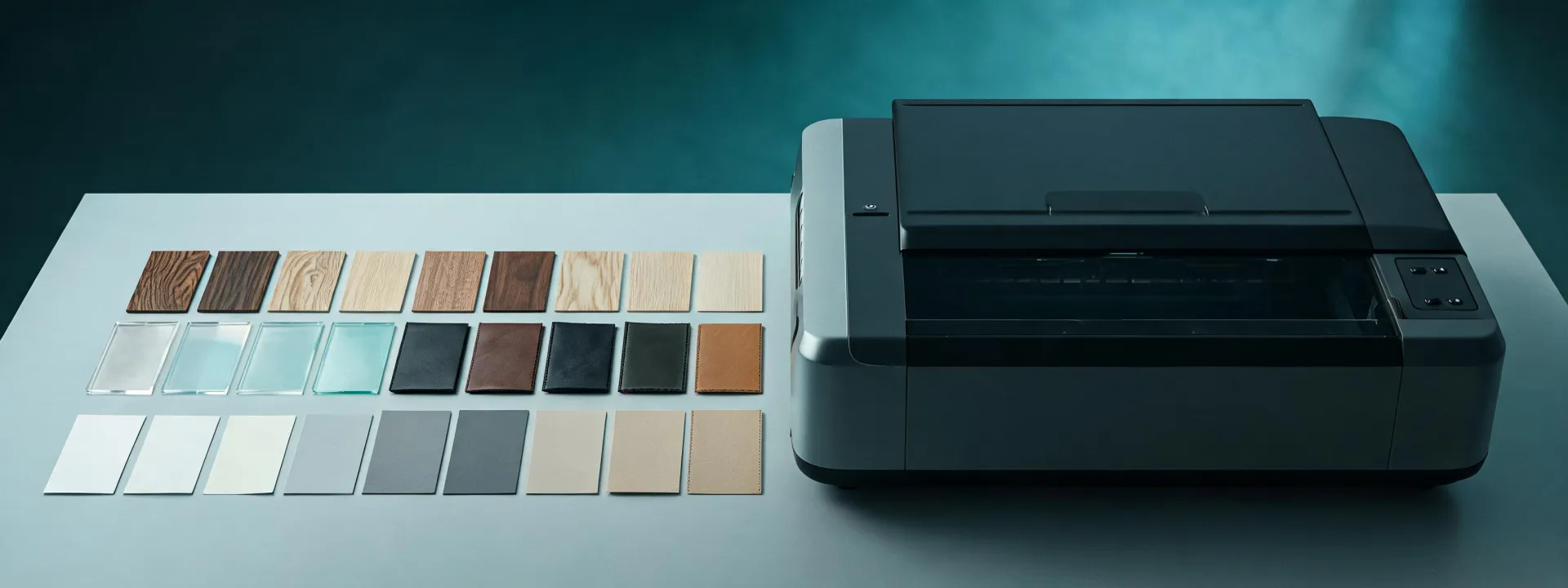
Material samples beside an enclosed desktop laser

Define the result before choosing the path

Send the material identity, geometry, quantity, and visual or dimensional acceptance criteria.

Frame an application test